Kyong Lee
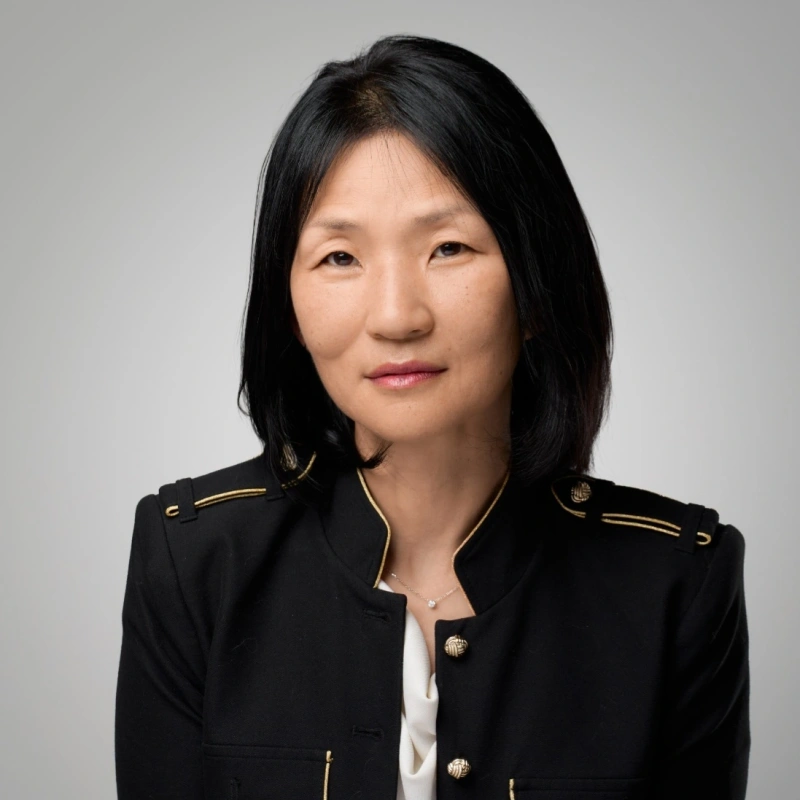
Kyong Lee is the co-founder, owner and director of Nutley School of Music in New Jersey. She started teaching piano in the early 1990s while studying piano performance at Montclair State University, and in 1999 she opened the school with 30 students and four teaching rooms. Today the school runs more than 700 weekly lessons across 18 rooms, and Kyong has taught over 30,000 hours of piano. She loves training teachers to grow, using the same principles she teaches her music students.
Season 1
|
Episode 26
Hiring Music Teachers: Kyong Lee on Culture, Scaling, and Managing Staff | Ep 26
Kyong Lee started out driving to her students’ homes to teach. Then a 40-minute drive ended in a no-show, and she decided to open a brick-and-mortar school. Twenty-seven years later, Nutley School of Music in New Jersey has about 800 students and 30+ teachers, and a second location is growing. In this episode, host David Martin talks with Kyong about her path from piano lessons as a child in Seoul to running a school.
Kyong is candid about the hard parts: a $40,000 penalty for misclassifying teachers, letting go of teachers she cared about, and staying personal as the school grew. She also shares the one interview question she uses to tell whether a teacher will fit her culture. Her advice applies to any school owner: hire for kindness, protect what you’ve built, and don’t be afraid to ask for help.
Kyong Lee
Kyong Lee is the co-founder, owner and director of Nutley School of Music in New Jersey. She started teaching piano in the early 1990s while studying piano performance at Montclair State University, and in 1999 she opened the school with 30 students and four teaching rooms. Today the school runs more than 700 weekly lessons across 18 rooms, and Kyong has taught over 30,000 hours of piano. She loves training teachers to grow, using the same principles she teaches her music students.
Watch the Full Episode
Show Notes
- Why she left in-home lessons: After a student skipped a lesson she’d driven 40 minutes to teach, Kyong rented a former doctor’s office for $750 a month with no deposit. She started with 30 students and four rooms.
- Respect for music teachers: Musicians put in years of work on their craft, and Kyong wants them treated like the professionals they are.
- The misclassification wake-up call: New Jersey’s Labor Department fined her school $40,000 in back employment taxes for treating teachers as 1099 contractors, and a nearby school closed after a similar audit. Her advice is to find a specialist who has handled this before and to talk with owners in your state.
- The “magic” hiring question: Kyong asks every candidate, “Are you willing to come in for just one student?” A lot of them say no, and she sees the answer as a test of character.
- Her minimum bar for teachers: Teachers must read music. A degree is preferred but not required, and personality matters most to her.
- Handling problem teachers: Kyong hears the teacher’s side before she shares what she’s been told, usually gives one warning, and lets people go when they put the school’s reputation at risk.
- Breaking the rules on admin hiring: She brought on her first dedicated admin, a student’s parent, at about 200 students. She still puts teachers in admin roles when she trusts how much they care about the school.
- Growing small on purpose: Her second location is capped at about 250 students so it stays personal. She set it up on Opus1 from day one so there was no data to move later.
- Advice to her younger self: “Don’t be afraid.” Make friends with other owners, keep learning, and ask for help.
David Martin (00:01)
All right, so you see it says live on the top. And there should be an uploading
Kyong Lee (00:08)
Percent of
David Martin (00:09)
a percent you see that percentage counting at the top? It’s a little
Kyong Lee (00:12)
Yes. Mm-hmm.
David Martin (00:13)
little cloud with an arrow going up. So we just wanna make sure that before we close out, that says a hundred percent.
David Martin (00:24)
And perfect. Okay. All right. Well you ready?
Kyong Lee (00:29)
Ready
David Martin (00:31)
Okay.
David Martin (00:35)
Well, Kyong Lee, welcome to the broadcast. So happy to have you on You have an amazing story, and I’m excited to dive in.
Kyong Lee (00:43)
Thank you. Happy to be here.
David Martin (00:45)
Yeah, yeah. Well so you you are the owner and director of the Nutley School of Music in New Jersey. and you started out as an in home music lesson program where you you traveled in home, but then you went to the brick and mortar pretty quickly, with about 30 students and has and that was like 27 years ago. now you’ve grown, you know, you’ve
David Martin (01:08)
Built and grown a school to 800 students. That’s amazing. And you’ve already and you’re expanding into a second location, which we’ll talk about. so just doing amazing things. but you I I I’d love to hear a little bit about your music background. Like when you got started as a musician, how did it all start for you?
Kyong Lee (01:28)
Well, when I was very little, I think five or six years old, I was at the age where I was going to start kindergarten but I had already learned how to read and write Korean. Korean is pretty easy because it’s a phonetic language. So my mom asked me if I would wanna go to piano school
Kyong Lee (01:53)
or go to kindergarten and I’m five or six, I don’t know. So I okay that sounds good. And my mom thought that I was gonna be bored in kindergarten because I already knew how to read and write. Apparently she told me that I learned how to do that by watching T V, like a Korean
David Martin (02:11)
wow.
Kyong Lee (02:12)
version of Samsung Street. So you can imagine how easy Korean is to learn how to read and write. But yeah, so that’s how I started. I started
Kyong Lee (02:23)
lessons with a lady up the street and she had a baby an infant and she would take care of the baby and then come teach me t piano I was in her house,
Kyong Lee (02:35)
her room, so she would the baby would cry and she would run to the baby and then she’d come back and teach me. But you know, I’m like six years old so I don’t know that’s not, you know, normal. So that’s how I started piano lessons.
David Martin (02:50)
Wow.
Kyong Lee (02:50)
I would
Kyong Lee (02:52)
walk myself to her house and walk back. And I had a little bag with books and things. and I was small so I would drag the bag on the ground so that there were like holes in the bag. So that’s what I remember my first piano lessons and piano was very, you know, popular. You know, that’s what most people did.
Kyong Lee (03:16)
But when I went to and then I moved to America, that’s from Seoul Korea. when I moved to America, I was fourteen.
Kyong Lee (03:25)
and a whole new chapter in the music learning happened and so in high school I continued to play piano and my choir teacher who was very generous she signed me out of gym classes. I didn’t go to gym the whole four years of com four years of high school because she had me practice the piano instead of going to gym class. I gotta be in gym so
Kyong Lee (03:53)
Well, I I thought that was pretty interesting, but so I did that and then I went on to college and that’s when I I saw these new instruments I’ve never seen before. But yeah, in high school I was in a a high school band, a rock band, pop band kind of thing. I accompanied for choir.
Kyong Lee (04:13)
So had a pretty rich experience in high school which led me to college and wanted to perform wanted to major in piano performance, so that’s the route that I took. But then I got to meet all these vocalists and
Kyong Lee (04:28)
violinist and I fell in love with the violins. I learned the violin then and then I was just interested in so many different music, musical instruments and people that play music and I love chamber music and I had a great time in college. And yeah, a lot of different experiences. So I got to
Kyong Lee (04:50)
learn and I self taught guitar, piano and the piano of course I that’s my instrument, but guitar was new to me, so I learned the guitar, the violin, the flute. I took Woodwin ensemble class so I got to I was exposed to all the great instruments. So you know, the love of instruments and musical knowledge and experience was always an interest to me. So
Kyong Lee (05:20)
I was a little afraid that like people would judge me and like, she’s a pianist, but she’s like messing with all these other instruments. But fast forward many years, you know, when I opened the music school, like that’s why I was so interested in so many things. And
David Martin (05:35)
Mm.
Kyong Lee (05:36)
I was able to at least do beginner lessons on these instruments. So I’m able to do piano, violin, guitar, flute, drums, and voice.
Kyong Lee (05:50)
So pretty lucky in that sense. But I’m always interested in learning new things. And very excited. I you know, every day is a a learning experience.
David Martin (06:00)
So so you had a sounds like you had very rich musical understanding as well as like a drive to to learn a lot about all the different instruments. So after caught like so when did you actually start realizing, hey, I wanna start a a music business a music school business. I wanna start teaching lessons. When did that start?
Kyong Lee (06:22)
So when I was in college, like first year in college, my sister’s husband’s
Kyong Lee (06:28)
cousins. They were little kids ’cause there were a big age difference, even though they’re like cousins. they were like five years old, like three brothers, they were five and six and seven or something like that, very close in age. And those were my first students. You know, they asked me to teach them piano because like we were related and I w I got my feet wet in teaching piano and I was very stressed, you know. I gotta get these kids to sound good and
Kyong Lee (06:58)
That’s how I started and then a friend of mine from college, she was teaching about thirteen or so students in their houses in Montclair, New Jersey. And she said she’s moving and she needs a teacher to take over. So that’s how I got started to teaching, took all of her students and then a few years went by, it grew to about thirty students that I had to travel to their houses.
Kyong Lee (07:27)
So and then one day I was driving and I saw a poor rent sign at this building that used to be a doctor’s office. So I met a nice landlord who was an elderly doctor, a heart surgeon, and he didn’t even charge charge me security for the rental. He looked at me and my ex-husband, who is my partner,
Kyong Lee (07:56)
We were twenty something, twenty-nine at the time, and he looked at us and he said, You kids, you know, I like you kids, just go ahead and do it. And the rent was seven hundred fifty dollars and no deposit. And so we got
David Martin (08:10)
Wow.
Kyong Lee (08:11)
very lucky because of the generosity of this nice elderly
David Martin (08:16)
So
David Martin (08:17)
you what was it that made you feel like you needed to rent this location? I mean, you already had these thirty students, you were driving around. w why did you why did you change?
Kyong Lee (08:30)
Well I got kinda sick of driving and I had a student like forty minutes away from me and it’s not an easy commute to that house and one time I went to his house and the babysitter opened the door and said, Well he’s not here, he went to a soccer game and
Kyong Lee (08:52)
I said I drove forty minutes for a no show basically. And that at that moment I knew like this is not for me. I don’t wanna waste time in the you know in traffic to be, you know, wasting my time first of all. And then when I called the mother afterwards, I said, I don’t think I’m gonna come to your house anymore because I really personally felt
Kyong Lee (09:20)
disregarded as a professional, like
David Martin (09:22)
Yeah.
Kyong Lee (09:23)
disrespected. And I
David Martin (09:24)
Yeah.
Kyong Lee (09:25)
said, I I expect to be paid for that time. And she said, No, I’m not gonna pay you. And then that moment I said, Well, then I’m not gonna come to your house anymore. I’m sorry.
David Martin (09:35)
Mm.
Kyong Lee (09:36)
And then she said, Well you’re not gonna even say goodbye to your student And I’m
David Martin (09:42)
Mm-hmm.
Kyong Lee (09:42)
like, Okay, no. I I I like the kid but
Kyong Lee (09:47)
I can’t teach him ’cause he’s not there and I’m wasting my time. So I’m kinda big on musicians being treated with respect because we spend tremendous amount of hours, you know, working on our skills, our craft, and teachers, you know, working on our teaching. And sometimes I feel like some people don’t respect us and you know, I want to really really
Kyong Lee (10:17)
educate people that we are professionals. We work just as hard as any any doctor would, you know what I mean? So we will see. Mm-hmm.
David Martin (10:25)
Right, right. So you moved into this space. You have this
David Martin (10:29)
you have this brick and mortar now. How many rooms did it have?
Kyong Lee (10:33)
This had originally four.
Kyong Lee (10:39)
And then we divided couple of rooms to make seven. I’m sorry, six and then one, two, three, four, five. Yeah, now there are six rooms. It started with four and then we divided even smaller rooms. So we had six for a long time.
David Martin (10:58)
Okay. Okay. And so what were some of the challenges at the beginning? So you have this new space, you have this building now, you have everyone coming to one place. That was probably a relief, right? From having to drive all over the place. What were some
Kyong Lee (11:11)
Yes.
David Martin (11:11)
of the challenges that you remember early on?
Kyong Lee (11:16)
Early on, you know, we were just, you know, a couple of kids from music college just graduated and a a few years had passed that we were going to people’s homes and then we just start this business. We don’t know anything. First mistake actually, first business mistake was that we opened in Jan w in December of nineteen ninety
David Martin (11:42)
Yeah.
Kyong Lee (11:42)
nine. my thought was
Kyong Lee (11:45)
we wanna be in the last century, you know. We
David Martin (11:49)
Ha ha ha.
Kyong Lee (11:50)
wanna be in the, you know, twentieth century. But that was a mistake because the New Jersey state charged us a whole year’s worth of tax for that year even though we didn’t any money. Yeah, it was like five hundred dollars, but still five hundred dollars is a lot of money when you have nothing.
David Martin (12:12)
Well, and especially when you have, you know, a thousand other things that you have to p make payments on all of a sudden that you didn’t have to pay before, right? All these expenses.
Kyong Lee (12:21)
Right.
Kyong Lee (12:23)
So the those business things that because we don’t have any background in business we’ve never really worked in like business setting. We’re just a couple of kids trying to make a make a living, you know, that was the reality and every mistake was a hard mistake and that was our first one. And then you know, just waiting for the school to grow.
Kyong Lee (12:50)
Yeah, but it grew kinda organically in the beginning. I taught piano mostly and my ex husband taught guitar and a a lady down the street who happened to be a school teacher, she walked up to us and said, Hey, I see you just open, can I teach for you guys? And I said, Sure. And that was our first fire and
Kyong Lee (13:17)
Interestingly enough, she still teaches for us ’cause she’s a nice neighbor. She retired from her regular school job but she still does lessons for us and the kids love her. She’s like in her sixties, late sixties and she’s a grandma now and we, you know, live through her progress of her as a mom and her and grandpa
David Martin (13:38)
Course. Yeah.
Kyong Lee (13:40)
and just to s live with her kinda like watch her develop as a
Kyong Lee (13:46)
nice lady. It’s also great, you know, when we talk about, you know, kids, we meet them at five years old and like they go to college after twelve, thirteen years and that’s been kind of what I wanted to wanted wanted our school to be, you know, like their second home and that’s been wonderful. But back to challenges.
David Martin (14:06)
Yeah.
Kyong Lee (14:07)
They were big challenges, but the worst one of all, besides COVID, was when we
Kyong Lee (14:16)
were flagged for misclassification for WTO employees versus 1099. So yeah that was a people try to warn us about that like accountants they said
David Martin (14:30)
Mm-hmm.
Kyong Lee (14:30)
you know that’s gonna be a problem you know be ready and all that but that’s an interesting story without getting too detailed after it was all said and done that the labor department
Kyong Lee (14:46)
fined us for forty thousand dollars in back taxes and interest for
David Martin (14:53)
Wow.
Kyong Lee (14:54)
New Jersey’s kinda tough about that. And we had a we had planned to do a payment thing so it was dragged out for many years. They it it’s really I could write a whole book about the whole whole thing, but Labor Department was not kind to us and they threatened us to
Kyong Lee (15:16)
audit the entire staff and
David Martin (15:19)
How many
David Martin (15:19)
teachers did you have that they were saying you misclassified?
Kyong Lee (15:24)
I think at the time, about fifteen, maybe sixteen. Yeah, so their thing was that it’s the nature of business. You can’t have music teachers doing music teaching for a music teaching business. So it was there wasn’t really no getting around that. And not only our school but two other schools in the same area were in question that they were being
Kyong Lee (15:52)
investigated I guess and the result was that other school next town over they were fined even more because they were bigger than us at the time. At the time we only had about three hundred students and the other school had like five or six hundred and they were fined a lot more. And another school which was smaller than us, the Labor Department actually came in and set
Kyong Lee (16:21)
in their office they went through everything they had, like all the drawers and computer things and they kind of set and counted how many students were coming in and out. So they were basically audited that way, which was I don’t think was too kind and this lady
Kyong Lee (16:41)
she fought the she went to court with that and tried to fight the the labor department but she lost and she she ended up closing her store so that was kind of scary for us so luckily we had an accountant who had a specialist that works with the accountant to fight for this kind of fight for you know on be our behalf because I was just too scared like
Kyong Lee (17:11)
we’re gonna lose all everything and we’re gonna lose the business. So it was really dire. It was a a serious situation there. But luckily we had the help of my accountant who was a good friend of my dad’s. They did a lot of business together ’cause my dad was a realtor. they helped a lot of Korean business owners in flushing New York area. So
Kyong Lee (17:35)
we really lucked out and I didn’t even talk to the labor department myself. So basically this specialist who works with our accountant dealt with all the negotiations. Like maybe the I think the the penalty was a lot higher, but he negotiated down to forty thousand. For four years.
David Martin (17:56)
That’s amazing.
Kyong Lee (17:57)
Yeah, four years back labor tax. What’s it called? Employment tax.
David Martin (18:04)
Like employment. Yeah. Yeah. You know, this is it’s amazing. I’ve had a lot of conversations with owners about this. And you know, it depends on the state that you’re in. I do think that there that makes a big difference. Some states really don’t crack down as much on this issue. they just the way they define it. But but boy, you know, what a what a big thing. I mean, that is a very disruptive thing. And like you say, you’re
David Martin (18:33)
your competitor had to just completely close their doors because it was the the penalty was just, you know, too much. So, you know, switching from independent contractors to employees, I think one of the things that I held out for a while, like I I paid as independent contractors for years and and then I did end up making the switch because I, you know, the state I was in was Oregon and we
David Martin (19:02)
Yeah, we had, I don’t know, I think we had thirty or forty teachers and at the time and it was like it was too risky. You know, I I actually got phone calls, multiple phone calls from like employment department auditors. Like
Kyong Lee (19:18)
Mm.
David Martin (19:19)
just kind of like almost like they were just like testing the water. They would ask certain questions to sort of test my staff. And fortunately I told my like I we were on top of it, like I knew that it was something.
David Martin (19:31)
But it got to a point to where it’s like, man, is it really worth saving the you know the seven or eight percent on your payroll to to be able to have independent contractors? Like, and again, depends on your state.
Kyong Lee (19:47)
Yeah.
David Martin (19:48)
and it depends on how how how strict it is. But certainly if you’re in this industry and you have teachers and you are, you know, paying them as independent contractors.
David Martin (19:58)
You should definitely check into the like this is not something to just sort of like, we’ll be fine, right? Like it’s
Kyong Lee (20:05)
Yeah.
David Martin (20:05)
it’s just it’s too serious of an issue, to your point, to just sort of ignore.
Kyong Lee (20:13)
Yeah, but what
David Martin (20:13)
So
Kyong Lee (20:13)
I was told by professionals is that don’t do the way you’ve been doing it because that’s a red flag. If you’ve been doing if you’ve been paying them as independent contractors, keep doing that because when you switch, they’re gonna ask you why did you switch? That’s sort of like
David Martin (20:32)
Mm-hmm.
Kyong Lee (20:33)
an admission to knowing that this was not the way to go. Like
David Martin (20:38)
Yep.
Kyong Lee (20:39)
So stick to what you have. But some people have changed and had no issues. So it really depends. So I think you should talk to people that are in state
David Martin (20:48)
Right.
Kyong Lee (20:50)
in your area and do what everybody else is doing.
David Martin (20:54)
Well, and there is
David Martin (20:55)
a way to do no, you’re exactly right. They can’t just all of a sudden reclassify and don’t change your behavior towards them at all. That’s a that’s a really good point. So one of the things that we did was we changed at the beginning of the year. In January, we changed because it was the end of you know, it wasn’t mid year. It wasn’t so we waited until the end of the year. The other thing that we did was we started having required meetings that the teachers had to attend. we started
David Martin (21:23)
doing reviews for our teachers. So we actually we did change our behavior toward them from before when they were independent contractors. We didn’t require any of that stuff to after when they were employees. But that is a really good point. And again, it’s just something like hire an attorney to help you with this. This is like it’s not that much money in comparison to what you could be facing if you you know, if you get audited and they find that you’re
David Martin (21:52)
Misclassifying them.
Kyong Lee (21:53)
Right, it’s a big deal and luckily I had the help of a good professional accountant who took care of us, but some accountants have no clue. Some attorneys have no clue. So you need to you can’t just find an attorney and deal with it.
Kyong Lee (22:12)
Yeah, some attorneys have no idea how to deal with that. So you wanna find somebody that’s already done it before and know that, you know and the law keeps changing or something. So be aware of be be aware of what’s happening, which is sort of what I don’t really do well.
Kyong Lee (22:32)
own cave on my own world, you know, so it’s good to, you know, network, always talk to other school owners, you know, share their stories and things.
David Martin (22:42)
Right. Yeah, absolutely. That’s one of the benefits of the collaborative aspect of things with being in a community of music school owners. Well, I wanna I wanna ask you a little bit about teachers, since we’re talking about teachers.
Kyong Lee (22:55)
Mm-hmm.
David Martin (22:56)
you you have how many teachers do you have now?
Kyong Lee (22:58)
Right now we have thirty plus. Thirty we go back and like
David Martin (23:03)
Yeah, yeah, around thirty. Okay. Yeah. So how do you first off, how do you pick a teacher? Like when it’s time to bring a new teacher in, how do you know that this teacher is gonna be a good fit with your culture?
Kyong Lee (23:20)
I have a magic question and if you pass this you are in. A magic question.
David Martin (23:25)
I love it. A magic question.
Kyong Lee (23:29)
my belief is that you have to be a nice person to work with me and work with children. I can’t teach somebody to be nice, but it I can teach
David Martin (23:40)
No.
Kyong Lee (23:41)
you how to show kids how to learn, you know. So I can train you if you kind of
Kyong Lee (23:48)
You’re not like the best whatever, you know, skilled person. The best skilled person may not be a best teacher because they don’t come with empathy and compassion, you know. So the magic question is this. Not that I’m gonna do this, but I would set it up.
Kyong Lee (24:09)
set the question up and say like after you know checking that they went to college or they didn’t but they have experience, they have professional experience, all the you know it checks all the boxes. But this question at the end of our interview, I will ask, okay, so it’s going to be kind of up to you and also it’ll be up to whatever luck you have in the schedule the way it is. we can’t just give you ten students right away. It doesn’t work that way.
Kyong Lee (24:38)
Are you willing to travel to come for just one student in the beginning? And there’s no guarantee when you’re gonna get to the number that you were hoping for. And if the answer is yes, yes, I’m willing to, you know, take a chance with your school and come for one student. If you say no, like that’s not worth my time, then that’s not the person for me. I may have five students waiting for them, but I would just ask the question. Are you willing to come for
David Martin (25:06)
Do you still want to ask
David Martin (25:08)
that?
Kyong Lee (25:08)
students. Do you trust me that much or trust the school or is this that important that you’re willing to take the chance? Are you nice enough to show up for one student?
David Martin (25:17)
Mm, that’s good. I like that. Now
Kyong Lee (25:21)
Yeah, that
Kyong Lee (25:22)
question’s important and that it has kind of proved who is nice. You know.
David Martin (25:28)
Yeah.
David Martin (25:29)
How many so out of let’s just say ten teacher interviews, how many will say no to that question?
Kyong Lee (25:37)
yeah, a lot believe it or not, a lot of them say no. It’s too far and I understand, you know, if they live thirty or more minutes away, ’cause everything happens so in close proximity around here. If it’s more than like five, ten, fifteen minutes, you know, for for parents and customers, five minutes is great. It’s a no brainer.
Kyong Lee (25:59)
Ten minutes, yes, still good. Fifteen now it’s getting a little like okay, I might check somebody else, you know, some some other place. But for teachers, the distance is a little bit longer. I have a teacher coming an hour away, three times a week, so that’s that’s a pretty long distance, but yeah, I mean musicians have to travel that far to work for a good school.
Kyong Lee (26:29)
Sometimes ’cause like I said earlier in our talk, even store owners, studio owners, school owners, they might mistreat the teachers because especially in our area we’re near New York, you were twenty minutes ride from Manhattan, and there are tons of musicians here and they’re all looking for jobs and they have to travel far sometimes. And yeah, people do say no, it’s too far for me.
David Martin (26:58)
Do you have certain minimum requirements from a teacher? Or is it more based on their attitude and their character?
Kyong Lee (27:09)
I won’t hire people that can’t read music because a lot of our students require reading. So that’s a big no. if you have proficiency in music that’s you know proved by like their degrees and professional background. So I question if somebody it not
Kyong Lee (27:32)
attended college, I’d have to test them their reading proficiency, etcetera. But I think their personality is very important to me. Like how they relate to other people.
David Martin (27:46)
Do you do you so you don’t require a degree, it sounds like? Okay.
Kyong Lee (27:50)
I do not, I do not. I
Kyong Lee (27:52)
I would like them to have some so then, you know, I don’t have to test them ’cause I feel a little bit awkward like saying, Okay, play me a C major scale, you know. You know, kind of thing.
David Martin (28:02)
Right, right. Yeah.
Kyong Lee (28:03)
But I had somebody actually auditioned. This is funny. And he said he does play piano and then I said, Okay, show me something on the piano. It was a young person, like college age, and then he
Kyong Lee (28:19)
play something I’d never heard before. And I’m thinking, okay, he’s just messing it, you know, he’s just messing around and he’s making it up. And so he played for a little bit, I said, okay, stop. And then he turns around and then says, Yeah, I just made that up. And I’m like, okay, I don’t think we’re gonna work together. So that was very interesting. You yeah, I met a lot of people that
Kyong Lee (28:45)
had no musical skills still applied even though the job description on indeed said you know must have musical skills and degree is
David Martin (28:55)
Sure. Yeah.
Kyong Lee (28:57)
recommended, bachelor degree at least, but this person just said on a Zoom interview, like, I don’t know how to play anything, but I love music.
Kyong Lee (29:07)
And like, okay, no sir, you know, take piano lessons if you wanna do that, you know, these are the steps you have to take. And I it was a young person, so I didn’t wanna say, Yeah, you’re wasting my time, go away. You know, I don’t
David Martin (29:18)
Ha ha ha.
Kyong Lee (29:18)
wanna do that. And I said, Well, I, you know, admire that passion. Like, please play piano and please take lessons and maybe one day you’ll be a music teacher. Good luck, you know. So I gave him some even recommended method books that he could use and the things that we use, so you know, in the future
Kyong Lee (29:37)
Somewhere he could be a teacher.
David Martin (29:40)
Have there been times, well, let me rephrase that question. When there are issues with a teacher that you have in your school, whether
Kyong Lee (29:49)
Mm-hmm.
David Martin (29:51)
it be parent complaints or maybe they’re chronically showing up late
Kyong Lee (29:59)
Yeah.
David Martin (29:59)
for their lessons, or they’re running over every single lesson and they’re not listening to the staff, or any you pick any of the variety of things. How do you handle that? How do you handle teachers that are
David Martin (30:10)
starting to kind of go bad and you have to manage that and deal with it.
Kyong Lee (30:14)
Yeah,
Kyong Lee (30:14)
so those things I know from my staff telling me or another teacher telling me. So I make mental notes every time those things come up. But when it’s pretty serious, I would hear the complainer, you know, who the informer, all the n all the data that they can give me, and then I will call the teacher
Kyong Lee (30:43)
And
Kyong Lee (30:44)
without them without me telling them what I heard, I would just have have a blank question. Okay, so how were you? How’s your family? You know, how’s blah blah that the special interest that maybe that I know about this person. establish that, you know, he he’s still a good person. I’m a still a good person, but I wanna hear their side of the story instead of saying, I heard this da da da happened, you know, explain yourself. You know, I don’t want I don’t take that route. I instead I say
Kyong Lee (31:15)
Okay, so tell me about the situation that came up in our conversation with my staff. What is you know, what can you tell me? Help me help you. You know, so that’s my approach. And at that point I could see like, okay, whatever this teacher told me doesn’t match what the office staff tells me. There’s a two sides of the story always. So I kind of pick and choose what I think is true. If it needs disciplinary
Kyong Lee (31:44)
if it’s really bad, you know, it comes up to a point where, you know, termination is, you know, the next step. And that that has happened too. I had a teacher who got a new girlfriend and he was FaceTiming while in the lesson. So I had to
David Martin (32:03)
With his girlfriend.
Kyong Lee (32:05)
Yeah, ’cause you know, new girlfriend was exciting and the person the teacher is like early twenties, mid twenties, and he never had a girlfriend before, so it
David Martin (32:18)
dear.
Kyong Lee (32:19)
was like brand new love and actually he’s getting married in October. So as me who the teacher actually was also a student that grew up in our school system. I
David Martin (32:32)
Mm.
Kyong Lee (32:32)
mean our our school.
Kyong Lee (32:33)
And you know, I felt for him, but at the same time I told him when you’re using your phone and your girlfriend is in your lesson, you know, via FaceTime, you’re actually stealing from your customer, your your parent that that paid money to have this lesson. I said that’s a big no no. And that’s first warning, do not, you know, tell your girlfriend to save your job.
Kyong Lee (33:03)
Don’t do that. Because I have a I had a close relationship with him. So and I saw him grow up and his dad passed away, you know, during the time and I felt bad for him. So I gave him one warning. So I but I knew he was on my radar. Like if I see him on the phone or like I hear about that again, you know, he’s gone. I said, if you do that again you’re definitely fired. And that you know, I love you but you gotta go. That’s not professional.
Kyong Lee (33:34)
So I gave him one chance. He didn’t do it again, but he got another job and he left. So in my world I feel like everything works out somehow.
David Martin (33:43)
Yeah.
Kyong Lee (33:43)
But I don’t necessarily have to be bad to my people to like or too strict with my people for them to show me their humanity. You know what I mean? So I always talk
David Martin (33:56)
Yeah.
Kyong Lee (33:57)
and I do fire people and I I tell why and I
Kyong Lee (34:03)
I approach it this way when I have to terminate. I would say, You’re a nice person, this is a nice job, but this is a wrong job for you because you’re not doing the things that this job requires. So goodbye, good luck, find something else to do. Or, you know. That’s basically the gist of it. I don’t say it exactly like that, but I had one teacher
Kyong Lee (34:29)
who was in lesson, he was a young male, twenty something again, and he talked a lot in the lessons and the parents complained that, you know, they they were talking a lot and they didn’t really play that much music. And the student complained to the parent. And I warned him about that and he’s like, we were just talking about what songs to work on ’cause that was important.
Kyong Lee (34:55)
Like, okay, but you gotta communicate that with the student and also the parent. You can’t just do it and say, Yeah, we it was a good lesson, you know, that lessons should be mostly plain. A little bit of talk, you know. So that didn’t make sense, but what really killed this one is he had a student who was about ten years old, girl student, who told him
Kyong Lee (35:24)
I I know this boy at school, I really like him. And if it was me, I would say, that’s nice, talk to your mom about that. Right? The end. This guy said, I used to like this girl when I was your age, and I never told her, and I wish I told her. And that was enough for the mother to say, I don’t want the teacher talking to my daughter about.
Kyong Lee (35:54)
you know the way
David Martin (35:56)
Mm-hmm.
Kyong Lee (35:56)
he likes you know love life. So because I already
David Martin (36:01)
Yeah.
Kyong Lee (36:02)
warned him about talking too much and you know sharing too much. That was only little bit of what he was telling her, but he had a a big roster. He had like thirty students or so. I couldn’t chance him
Kyong Lee (36:19)
doing that again to somebody even after I said, you know, we don’t really do too much talking and giving advice on topics. So the mom the mom of this girl said, you know, I wanna keep my daughter as pure as long as possible. I don’t want her talking about whoever love life thing in the lessons. But she also said, Don’t tell the teacher ’cause she doesn’t want to get him in trouble.
Kyong Lee (36:49)
So there’s like many things happening in this scenario but yeah, that was enough for me. I told the guy, the teacher said I said, you know, it took me twenty five year at the time it was twenty five years to build my school and I don’t need people going around saying that, you know, teacher at the school gives out love advices. So you have to go. And he begged me he begged me not to fire him.
Kyong Lee (37:17)
But there were too many incidences, too many red flags for this guy. And I think he thought he was safe because he had thirty students. But nobody’s safe when you are bad, you know, like and you don’t have common
David Martin (37:28)
Yeah. That
Kyong Lee (37:30)
sense, you know. You shouldn’t tell kids about your history of whoever you liked or didn’t like or whatever. So that was yeah. Unfortunate, but he and
David Martin (37:45)
I think it
Kyong Lee (37:46)
Yeah, as he left he actually cried and said, I need this job. I need I have bills. And I’m like, I hear that, but you know, it’s not I can’t afford to have a teacher that’s not gonna keep our standards and what what is expected for a teacher to behave, you know? So that was the end of him.
David Martin (38:10)
Wow. Yeah.
David Martin (38:13)
I think those are hard conversations because we are dealing with just human beings and and they
Kyong Lee (38:18)
Yeah.
David Martin (38:18)
are gonna, you know. I one of the things I I love about you, Kyong, is you’re you are a very kind person. I see that. And you make
Kyong Lee (38:27)
Yeah.
David Martin (38:28)
and it and it speaks a lot that you say that the teacher needs to be kind, right? That’s a that’s a core value of yours, clearly.
Kyong Lee (38:35)
Okay.
David Martin (38:35)
and so to push you to that point to where it’s like, no.
David Martin (38:39)
Sorry, you’ve crossed the line, you know. to be able to do that, even when you I’m sure you’re you know, your heart’s bleeding for this person, but it’s like the business, if you don’t protect it, then you won’t have a business and then nobody has a job, right? It it that hurts everybody.
Kyong Lee (38:58)
I think the bottom line was that I couldn’t afford another complaint from a parent about something like that. I mean th one was enough
David Martin (39:07)
Yeah.
Kyong Lee (39:07)
for that one. And before that was another parent saying he’s talking too much. Common sense,
David Martin (39:12)
So that kind of
Kyong Lee (39:14)
common sense.
David Martin (39:15)
yeah, absolutely. That that kind of brings up my next question is just dealing with staff, right? So you have your teachers, obviously, they’re on your staff, but then you’ve got your admin staff, your front desk staff. And at what point during your growth process as you’re, you know, getting more and more enrollments coming in, did you realize you needed help? You needed admin help.
Kyong Lee (39:40)
I think when we were about two hundred we hired a mom of our students and she was a college professor. She did a great job helping us. That was our first admin person that only did administrative work, not a teacher.
Kyong Lee (40:00)
before that I think we had asked other teachers to help us, you know. I break all the rules, David. You know, not using teachers as an administration person, but I still do it and it’s because I know who cares about our school and
David Martin (40:18)
Right.
Kyong Lee (40:18)
who will show up. So I don’t follow that rule. So I’m a rule breaker that
David Martin (40:23)
Did you okay and
David Martin (40:24)
that well and that’s I mean i at the end of the day, you know, one of my best admin people was actually a teacher, and I ended up promoting him to becoming my faculty supervisor. So we had about 50 teachers at the time, and he was in charge. He was in charge of hiring, onboarding, doing reviews, firing. Like he did it all. and it was
Kyong Lee (40:49)
Great.
David Martin (40:49)
fantastic.
David Martin (40:51)
It’s one of the best decisions I ever made. So I’m with you. Like, if the shoe fits, like if it’s the right person, it’s the right person, regardless of whether they’re a teacher or not. but there is a danger, and you you know, you and I both know that. There is a danger in in promoting a teacher to more of an administrative role because obviously this person could ultimately become a competitor. And if we’re teaching them the administrative side, then we’re kind of giving them the t the keys to the kingdom, so to speak.
David Martin (41:20)
But I think I think there’s also an ethical thing there too. Like some people are honest and you can tell what their motivation is based on your what you know of them and your relationship with them. And this particular guy for me, I knew that he was not gonna I he didn’t he wasn’t even the kind of person that would have had I felt like the kind of the what would you say?
David Martin (41:50)
the de the personality maybe to to start and yeah yeah, exactly.
Kyong Lee (41:53)
Yeah, the entrepreneurial spirit or their kind
Kyong Lee (41:57)
of failing as a business owner. I I think a lot of people don’t have that like almost like a a gambler mentality like I have. I’m gonna
David Martin (42:07)
Mm-hmm. Yeah.
Kyong Lee (42:09)
try it, you know. I that’s why I started the second location and I get such a high from having a new having to open a new store that had zero students.
David Martin (42:21)
Yeah.
Kyong Lee (42:22)
And going from zero to thirty was really hard. And you know, I but I wanted to sort of prove to myself I can do it, you know. I wanted to test all the stuff that works for my big school to open this second school and the second school is only sized for about two hundred and fifty students maximum. So
Kyong Lee (42:45)
I think it’s more manageable and I think in the future I’m just gonna open small ones so then it feels more like a smaller unit, like more personal for people so people would know each other’s names. Like I can’t remember 800 students’ names. And something I lost along the way from going from 30 students to 800.
Kyong Lee (43:12)
And yeah that’s really hard to enforce also. We were talking about office staff, office staff to say hello first name.
David Martin (43:19)
Right.
Kyong Lee (43:20)
I mean I wanted to make that a thing, but I can’t even do it, so I can’t make my staff do it. So in New Jersey people are not as friendly, you know, and they’re okay with it. It’s like the normal thing to leave them alone sometimes, some some people, so it’s okay, but
Kyong Lee (43:41)
It may scare them if I all of a sudden call everybody by their first name. Like how do you
David Martin (43:46)
Scared up.
Kyong Lee (43:48)
know?
David Martin (43:49)
What is so okay, so on that
David Martin (43:51)
note though, how do like what were some what have been some of the best tools that you have in your school to automate tasks, to make things run smoothly at 800 students, plus now a new location? Like what are some of the big tools you would recommend? People that are kind of up and coming, they’re growing fast, and what would you recommend?
Kyong Lee (44:15)
Well, we used to use Google Calendar for scheduling. And I can’t even imagine using that now ’cause we switched to Opus Opus One I think a year and a half ago or almost two years now. And because everything’s in one place and it’s easy to use. So, I know every school kinda customizes to what
Kyong Lee (44:40)
you can use but there are tools and reports and all that that’s very easy to use. So that’s been the biggest tool honestly.
Kyong Lee (44:49)
to run this kind of school and my second school, which only has about sixty students right now, I started with op Opus to set it up. and then I didn’t have to go through the pain of transferring all the the data to use Opus. So like I started with zero students with Opus and that’s been time saving and, you know, stress relieving and all that good stuff. So I really like Opus. Yeah yeah.
David Martin (45:17)
Yeah. Yeah.
David Martin (45:19)
That makes sense. Do you have Opus are you do you have like the plus version of it with the marketing and all that? Or what do you do for all of your all of that kind of
Kyong Lee (45:29)
I
David Martin (45:29)
stuff?
Kyong Lee (45:30)
think I signed up for that, but I didn’t really use it yet. Fairly still new to Opus and also I spread myself too thin, I think, with a lot of
David Martin (45:41)
Ha ha.
Kyong Lee (45:41)
tuning. I also signed up for recently I am finishing up a vocal training certification from New York.
Kyong Lee (45:51)
vocal coaching school in midtown New York and incredible program if you ever if anyone is interested in teaching voice in a really effective, friendly, and amazing way, that’s I really recommend that program, New York Vocal Coaching.
Kyong Lee (46:09)
that was a twelve week program and just life changing, amazing things about the the voice and how it’s all the parts work and resonance and all kinds of vocal technique, vocal exercises and things. It just opened my white my world to the vocal world that I wasn’t sure. As a pianist I played a lot for voice students and voice professionals. I never really appreciated the voice
Kyong Lee (46:39)
the way I do now af you know, since after the the program. And I started my graduate course at Columbia. there’s a teachers college division of Columbia University. And that’s also life changing. So my time is I I have no time to do anything except all the stuff that I wanna do, like learn and grow and
Kyong Lee (47:07)
make my schools better. gave up any social life and happy.
David Martin (47:14)
So and that kind of leads me to another question is like, how do you do it all? I mean, you’re you’re you’re running 800 students through one location, you’ve got a brand new location, you just started up, you’re taking these courses, you’re doing these classes, like how do you how do you or how have you created systems to preserve the quality of the like especially your original location that’s got the 800 students?
Kyong Lee (47:41)
I mean we’re not without problems or challenges, but I think when you run a business you gotta understand we’re always gonna have problems, we’re always gonna have challenges and need for improvement. It’s it whether it’s a process or, you know, educating our people or you know, making our keeping our people happy, you know, clients and our teachers. And my focus is on
Kyong Lee (48:09)
growth really, professional growth, personal growth, all that for myself and also for everybody that I come in contact with, you know. Anything I could do to help, I will do. I’ll make time. So how do I do it all is I have a great operations director at my big location. If I don’t wanna go in for six months, I don’t have to go in. I will
Kyong Lee (48:36)
keep conversations with my operations director. Also I have a partner. we’re fifty fifty for the first location. so he can take care of things. I don’t really go in anymore too much. I do have a couple of students that I work with, but
Kyong Lee (48:54)
It is an ongoing challenge. I’m not gonna say everything’s great, you know, get a good operations director or general manager for some people. there
David Martin (49:04)
Yeah.
Kyong Lee (49:04)
is no unicorn. There’s no one one kill.
Kyong Lee (49:11)
punch or there’s no one answer that that’s what I’ve been realizing.
David Martin (49:15)
Yeah.
Kyong Lee (49:16)
There are many answers. There are no one correct answer or many correct answers. There are just there are things you can try and learn from. You know?
David Martin (49:32)
And that that kind of leads me to my final question for you, which is what piece of advice would you give your younger self when you were first starting out? knowing what you know now, knowing all the different strategies and the conversations you’ve had with these difficult teachers and training your staff and you know, swapping out one tool for another tool.
David Martin (49:59)
What what would the advice be if you were talking to that young version of yourself with the thirty students just moving into the brick and mortar for the very first time?
Kyong Lee (50:09)
I would say let me think about this person.
Kyong Lee (50:18)
I would say don’t be afraid.
Kyong Lee (50:24)
Don’t get stuck in that space headspace of just worrying and being afraid things will go wrong, you know. Make friends, talk to people that have done what you’ve done and read and keep learning. That’s what I would say. Don’t be afraid because you know.
Kyong Lee (50:53)
The sun will come out tomorrow and everything
David Martin (50:55)
Yeah.
Kyong Lee (50:56)
will be work everything will work out and you know that’s the track record that I have. Everything that could have been a disaster was saved, either you know, myself working hard or getting help from other people. That’s another thing. Don’t be afraid to ask for help. You can’t do it alone. That’s what I would tell myself.
David Martin (51:21)
That’s great advice, Kyong
Kyong Lee (51:23)
Yeah.
David Martin (51:24)
Li, thank you so much for being on the broadcast today. You are a very special person. You’ve accomplished
Kyong Lee (51:30)
Thank you.
David Martin (51:31)
so much and just a a great person to talk to as well. so thank you
Kyong Lee (51:36)
Yeah, thank you.
David Martin (51:36)
again and and keep doing what you’re doing. Keep it up. I’m excited to follow your journey as you continue to expand your business.
Kyong Lee (51:47)
Thank you so much, David, and thank you for this opportunity. And if anyone out there needs advice, I’m I’m here. I’m here to help anybody that needs it.
David Martin (51:57)
All right. Awesome. Thank you, Keong.
Kyong Lee (52:00)
Thank you, David. It was fun.