Ruthie Smith - Music Teacher - sitting at piano and smiling at something off camera

Ruthie Smith

Ruthie is the Founder of Music Speaks Studio, growing a 300+ student arts school in San Diego.

Season 1

|

Episode 11

Accidental Entrepreneur to Community Leader: How Ruthie Smith Grew Music Speaks Studio Through Groups, Partnerships & Culture

In this episode of the Performing Arts School Entrepreneur Podcast, host David Martin welcomes Ruthie Smith, founder and CEO of Music Speaks Studio in San Diego, CA — a fast-growing music and arts school serving 300+ students through private lessons, group classes, and visual arts programming. What began with a few piano and vocal lessons in her living room has grown into a thriving multi-teacher, multi-program studio with deep roots in the local community.
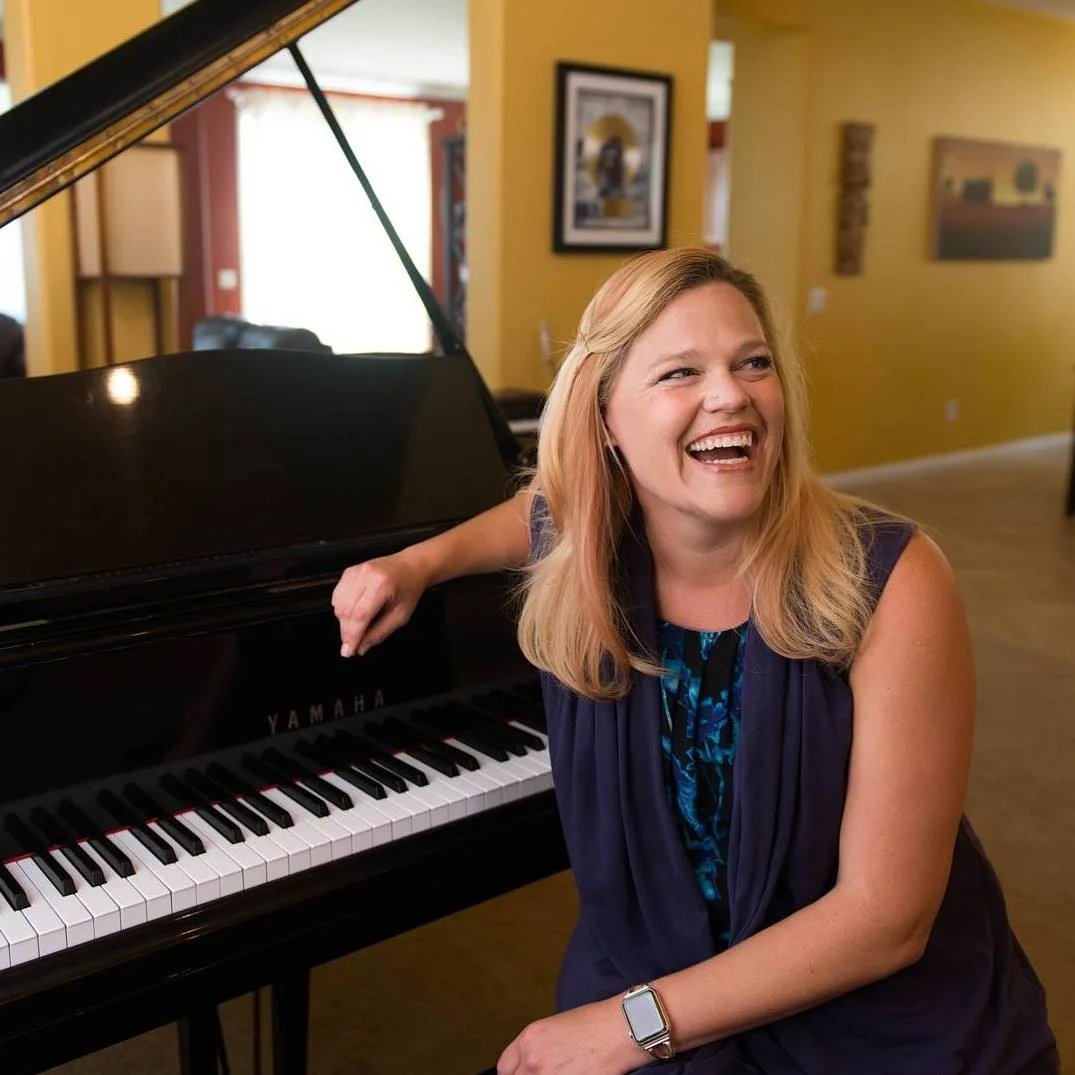
Ruthie Smith - Music Teacher - sitting at piano and smiling at something off camera

Ruthie Smith

Ruthie is the Founder of Music Speaks Studio, growing a 300+ student arts school in San Diego.

Watch the Full Episode

Show Notes

This episode features an inspiring conversation with Ruthie Smith, founder and CEO of Music Speaks Studio in San Diego, about how she evolved from an “accidental entrepreneur” teaching lessons in her living room to leading a thriving music and arts school serving hundreds of students. Host David Martin and Ruthie explore how community, creativity, and intentional systems shaped her journey and helped her build a school that grows not just students’ skills, but deep connections and culture across programs.

  • Humble beginnings and real-world grit, including juggling teaching with motherhood before realizing her side gig was a sustainable business in the making
  • Moving from solo lessons to structured group programs, using games, peer interaction, and strategic scheduling to boost engagement and retention
  • Shifting beliefs about staff and systems, including hiring early teachers during COVID and building a collaborative culture rooted in shared standards and shadowing
  • Innovative retention levers, like “flex credits” and attractive group offerings that increase commitment and open doors to additional arts programming
  • Growth advice for owners feeling stuck, from focusing on what already works to leaning into referrals and improving online discoverability

Together, these themes offer a blend of strategic insight and heartfelt leadership lessons, showing how curiosity, partnership, and culture can turn a fledgling studio into a vibrant community hub. It’s a valuable conversation for studio owners at any stage who want to build a school that’s both impactful and sustainable.
From Universal Music Group to Accidental Entrepreneur

Host (David Martin): Ruthie Smith, it is so good to see you. You are the founder and CEO of Music Speaks Studio in beautiful San Diego, California. You offer music and art classes, serving about 300 students through private lessons and group classes. Your story is unique because you expanded into group and art programs through partnerships with charter schools, regional centers, and nonprofits. You’re also a coach with the BAM Squad. Did you start your school from scratch or did you buy it?

Guest (Ruthie Smith): I started it from scratch, though I initially thought it would just be a side gig teaching a few lessons out of my living room. My professional background was in the music industry—I worked at Universal Music Group for nearly a decade. I eventually left Los Angeles for love and moved down here.

Once I had two kids, I realized I needed a goal or a distraction. A neighbor heard me playing piano in my front room and asked if I would teach her daughter. Around the same time, someone else heard me sing and asked for vocal pointers for an audition. Those became my first two lessons.

I call myself an “accidental entrepreneur”. I wasn’t interested in being a salesperson and I didn’t have dreams of running a business; in fact, sometimes I wish someone would just tell me what to do so I could complete the task and go home. But sharing music with the world is so rewarding.

Humble Beginnings and Neighbors’ Questions

Host (David Martin): Most music school owners start as independent teachers at home. How long was that your reality?

Guest (Ruthie Smith): It was extremely humble. In the early days, I was literally wearing my son while teaching. Eventually, I went from a few classes to having 20 or 40 cars show up at my house in a week. My neighbors were very kind, but they did start asking if this was a long-term plan.

In 2018 and 2019, I started listening to podcasts like Build a Music School. That library of information gave me the steps to hire my first teacher and improve my marketing. I treated it like my own master’s degree. Joining a mastermind group was the real driver for me because I realized I didn’t have to do it alone.

Pivoting During the Pandemic

Host (David Martin): I know you were looking at commercial spaces right before the world changed in 2020.

Guest (Ruthie Smith): In February 2020, I was working with a real estate agent. I am so grateful I didn’t sign anything before March. When COVID hit, I pivoted immediately. School ended on Friday, March 13th, and by Monday the 15th, we had moved all lessons online with no gap.

The studio actually blossomed during COVID because music was one of the few activities kids could still do consistently when soccer and gymnastics were canceled.

The Power of “Buddy Week” and Quick Wins

Host (David Martin): You mentioned “Buddy Week” as a growth tool. How does that work?

Guest (Ruthie Smith): Buddy Week is so much fun. Every student gets physical invitations to bring a friend to their lesson. We create a specific lesson plan that bypasses the “boring” stuff—we don’t spend time on the grand staff or finding middle C. We want to give the guest a super quick win.

We use rhythm cups or teach a simple four-note chord progression to a popular song. In the last five to seven minutes, we invite the parents in to record their kids playing along with a YouTube track. When a parent sees their child learn a song in 25 minutes, it’s really impressive.

Partnering with Charter Schools

Host (David Martin): You mentioned that close to 40% of your student body comes through charter schools. How did you break into that market?

Guest (Ruthie Smith): It started when a friend mentioned a charter school looking for a music enrichment program. In California, there are state funds that families can use for enrichment programs. We became a vendor partner for several homeschool charters.

It is tricky because they don’t use autopay and often pay 90 days in arrears. I have to build an administrative fee into those rates to cover the manual invoicing and the risk of being paid later. However, the word of mouth in charter school communities is incredible. Once you are a vetted vendor, it makes it very easy for parents to choose you.

Prioritizing Group Classes and Prime-Time Scheduling

Host (David Martin): You made a bold decision regarding your schedule. Tell us about the “Prime-Time Group” strategy.

Guest (Ruthie Smith): I decided to prioritize group space. Between 3:30 p.m. and 7:30 p.m., my staff is not allowed to book private lessons. Those prime hours are for groups only. If someone wants a private lesson, they have to leave school early or stay up late.

We tell parents that “music is meant to be shared”. Group lessons create a healthy sense of friendly competition and peer intrigue. It also builds confidence for performances because students are used to playing in front of their classmates every week.

Revamping Cancellation and Makeup Policies

Host (David Martin): Did any of your COVID-era policies stick around long-term?

Guest (Ruthie Smith): Yes, specifically our “Flex Credit” policy. We don’t do traditional makeup lessons. If a family cancels with 24 hours’ notice, they get a flex credit. They can use that credit to sit in on a beginning band practice, join an art class, or work with a different teacher.

This helps people get more exposure to our different programs. If someone is planning to leave the studio but has credits left, we offer to let them use them for a “Sip and Strum” or an art class instead of just losing the lessons.

Implementing “Art Fundamentals” Curriculum

Host (David Martin): You also offer art classes using a specific curriculum. What is that program?

Guest (Ruthie Smith): We use Art Fundamentals, which is a curriculum run by Benjie and Lauren Kushins in Northern California. It is absolutely plug-and-play. It utilizes art history and step-by-step instructions. It’s so well-structured that I could probably teach it myself. It allows us to offer an art program without having to invent unique sculptures or projects from scratch every week.

Hiring and the “Love Bomb” Warning

Host (David Martin): Hiring is often the hardest part of scaling. What was your toughest lesson there?

Guest (Ruthie Smith): I learned the importance of the training and shadowing period. I once had an applicant who I call the “employee love bomb”. She had tons of energy, was a beautiful vocalist, and told everyone how amazing the staff was at a karaoke event.

However, when it came to her final week of shadowing, she came in “like a sloth”. Halfway through a class, she took a phone call, said she had an emergency, and we never heard from her again. If I hadn’t had that shadow period and had just given her a full schedule, the disappointment for those families would have been massive. Now, we always have instructors shadow so the families see multiple members of our team. It uncomplicates things when we need a substitute.

Advice for Breaking the 100-Student Mark

Host (David Martin): What tactic would you give a studio owner trying to break past 100 students?

Guest (Ruthie Smith): First, you’ve got this. Second, focus on what is already working. If word of mouth is your main growth driver, do a buddy week or a referral program with a specific incentive, like a Roblox gift card. Make your current fans into super fans.

Also, make sure your Google Ads are on point. If someone searches for “piano lessons near me,” you have to be the one who shows up.

A common mistake I see is trying to reinvent the wheel. Don’t spend months looking for a new piano curriculum just because you’re unsure if your current offering is working. Double or triple down on what you already do well.

Daily Habits and Staying Grounded

Host (David Martin): How do you balance being a business owner, coach, and mom?

Guest (Ruthie Smith): I use a “5-second journal”. On the left, I check in on how I’m feeling. On the right, I have two columns: one for tasks that matter to the studio and one for tasks that matter to my family. I put a little heart over the family column and an eighth note over the studio column.

I also implement a specific strategy to physically be in the studio for every shift at least once a month. I’ve broken our days into shifts and I have a recurring Google Calendar that I share with my “welcome team” and my husband. This makes my presence predictable for the staff and helps my husband know when he needs to handle dinner or get the kids to soccer.

The Future: Expanding into Nonprofits

Host (David Martin): What is next for Music Speaks Studio?

Guest (Ruthie Smith): We are looking for a much bigger, more robust space. I’m also in the process of creating a 501c3 wing. As a for-profit studio, I can’t always afford to send instructors to local rec centers or underserved areas.

Having a separate nonprofit entity will allow us to access city funding and grants. My goal is to expand music education so we can reach the families who live “at the bottom of the hill” and can’t afford full lesson rates. We want to impact more lives through music.

Host (David Martin): Ruthie, thank you for sharing your journey and for all you do for the industry.

Guest (Ruthie Smith): Thank you, David.

You may also be interested in: