
Benjie Kushins Headshots

Benjie Kushins

Benjie is the Co-founder of Art & Soul Music and Dance, building a multi-disciplinary school through partnerships and creativity.

Season 1

|

Episode 6

From Classrooms to a Creative Empire: Benjie Kushins on Growing Art & Soul

In this episode of the Performing Arts School Entrepreneur Podcast, host David Martin sits down with Benjie Kushins, co-founder of Art & Soul Music and Dance, to unpack how he and his wife Lauren built a thriving multi-disciplinary arts school from humble beginnings teaching in local classrooms.
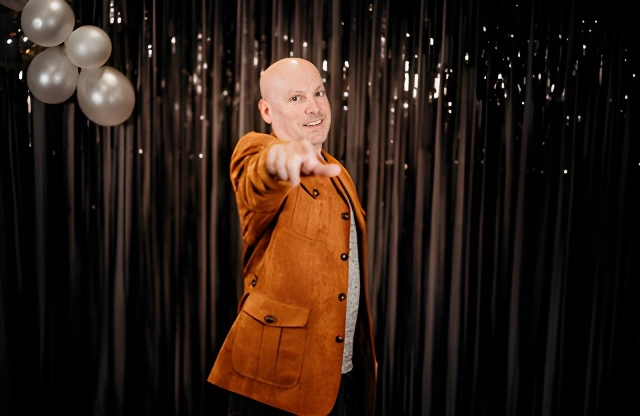
Benjie Kushins Headshots

Benjie Kushins

Benjie is the Co-founder of Art & Soul Music and Dance, building a multi-disciplinary school through partnerships and creativity.

Watch the Full Episode

Show Notes

This episode features a thoughtful conversation with Benjie Kushins, co-founder of Art & Soul School of Performing & Creative ARTS, about how he and his wife Lauren built a thriving, multi-disciplinary arts school by meeting their community where it already was. Starting with classes taught in local schools and growing into a full-scale creative organization, Benjie reflects on two decades of experimentation, risk, and steady evolution rooted in service and collaboration.

  • Turning school partnerships into a sustainable growth model, and why bringing programs directly into schools created momentum early on
  • Why going to students beat waiting for them to come, reframing outreach as access rather than marketing
  • The leap from a home-based business to a dedicated studio, including the pressure, uncertainty, and payoff that came with expansion
  • Building a collaborative, multi-talented team, grounded in trust, shared values, and creative flexibility
  • Systems and software that made scaling possible, creating consistency and freeing leaders to focus on vision instead of administration

Together, these themes highlight how patience, creativity, and community-first thinking can fuel long-term success. Benjie’s story is a powerful example of building something meaningful over time — not by chasing growth for its own sake, but by creating programs that genuinely serve students, families, and schools.
The Early Years: Piano Lessons and Parental Discipline

David Martin: Benjie, it’s great to have you here. You co-founded and direct the Art and Soul School of Creative and Performing Arts in Santa Rosa, California. To start, did you grow up in a musical family?

Benjie Kushins: I did. My mom was a piano teacher. We had a baby grand piano in our living room, and there was always music going on. When I was around 10 or 11, she offered to be my teacher. The first lesson went great, but then she told me to practice for a week.

When we sat down for the second lesson, she asked if I had practiced. I lied and said I did, but since she was home all day, she knew there had been no playing. She simply said, “No, you didn’t,” and that was the end of our lessons. I learned quickly that you have to practice and you can’t lie to your parents.

Discovering Percussion and Choice of Career

David: Where did percussion enter the picture for you?

Benjie: It was random. In fourth grade, if you joined the band, you could skip a class like math or PE once a week. My friends and I joined just to get out of class. I happened to pick drums—I don’t remember a specific draw, I just thought it looked fun.

I stayed with drums through 12th grade in California public schools. I had a different band director every single year. I noticed early on that teaching was not a very steady gig in public schools, which imprinted on me more than I realized at the time. I didn’t even know you could major in music in college until my junior year of high school. I thought if you were a musician, you just went out and toured.

University Life and “Adulting Light”

David: How did your parents respond when you decided to lean into music?

Benjie: It was split. My mom was the artist and dreamer, but my dad was logical. He was concerned about how I would make a living. We agreed that I would go to a state college for a year to see other things and make sure I could “hang” with other musicians. I went to Cal State Northridge and then eventually transferred to Berklee College of Music, which was my dream.

At Northridge, I had an instructor named Jerry Steinholtz. He was incredibly direct. He wouldn’t ask if you practiced; he just knew. If you hadn’t practiced, he’d just say, “I’ll see you next time”. He was brutally honest, and that made it mean so much more when he finally said, “You got it”. He shifted me from just being a drummer to being a percussionist.

The Professional Touring Years

David: What happened after you graduated? Did you tour?

Benjie: I joined a band in Santa Rosa that was getting bigger. We toured all over the West Coast. One night, a millionaire hedge fund manager saw us playing in wine country and offered to invest in a demo.

We put together a budget for $100,000, which felt like an impossible amount of money to us. He looked at it and said, “That’s it?” and funded it himself. We flew to Vancouver, stayed in nice hotels, and recorded in a world-class studio. We did that for 10 to 15 years, touring with bands like Train and the Goo Goo Dolls while I did side teaching to keep things going.

Starting the First Studio Next to a Sex Shop

David: How did you transition into owning your own studio?

Benjie: I was teaching in the back of a music retail shop that was closing down. A guitar teacher and I decided to open our own place. We found a unit in a shopping center that used to be a Jenny Craig. Our business proposal was terrible; we projected that after all expenses and every room being at capacity, we would only profit $500 a month.

The landlord said yes, likely because the unit had been empty for a while. Our neighboring business was an adult bookstore. They actually complained to the landlord that our drums were too loud. I was the owner, the teacher, and the front desk person all at once, which was a nightmare.

The School Contract Model

David: You eventually sold that partnership and moved to Santa Rosa. How did you start Art and Soul?

Benjie: My wife, Lauren, is an art educator. When we moved, we decided to avoid the overhead of a building and instead go into the schools. We approached PTAs and parent associations because California was cutting arts funding.

We customized everything for each school. If they wanted one art teacher once a month for one class, we did it. Being in the schools gave us instant credibility with parents—they assumed we were an extension of the school district. At our height, we were in 20 to 22 different schools.

Returning to Brick and Mortar

David: When did you decide to open a physical location again?

Benjie: It was about 10 years ago. We were managing everything out of our home with two kids, and it was getting too distracting. We also realized we had no control over school contracts; a school could decide to hire our teacher directly and we’d lose a major contract instantly.

We looked for a small office but ended up with a 2,000-square-foot space. We opened with no students in the new area. On our grand opening, despite our marketing, only one kid signed up for two classes. We had to hustle, using the school flyers to market the physical studio until it finally picked up.

Staffing, Culture, and Benefits

David: How has your approach to hiring changed now that you have a staff of 60?

Benjie: We moved from independent contractors to employees, which added costs but gave us more stability. We are very big on references; we require at least three back before we hire anyone.

We also focus on culture. We offer 401ks and something the staff loves: free music lessons. About 60% to 70% of our staff take lessons from each other. It’s a great perk, and it actually helps the business because a piano teacher taking ukulele lessons can eventually sub for those classes.

The “Art Fundamentals” Curriculum

David: Tell us about the Art Fundamentals program you license out.

Benjie: We realized many music studio owners want to add art but are afraid of the mess or don’t know the curriculum. We created a “no-mess” art program—no sinks or hosing down floors required. It uses no-mess clay, watercolors, and oil pastels.

We package the curriculum, marketing templates, and coaching for other owners. It’s highly profitable because if you already have 100 music students, 15% to 20% will likely sign up for art without you spending a dime on additional marketing.

Final Advice for Studio Owners

David: What advice would you give your 23-year-old self?

Benjie: Think scale from day one. Even if you only have three students, set up systems as if you have a thousand. If you have bad systems at 100 students, you’ll be in serious trouble at a thousand. Also, don’t stress. It won’t always work out the way you think it will, but it is going to work out.

You may also be interested in: