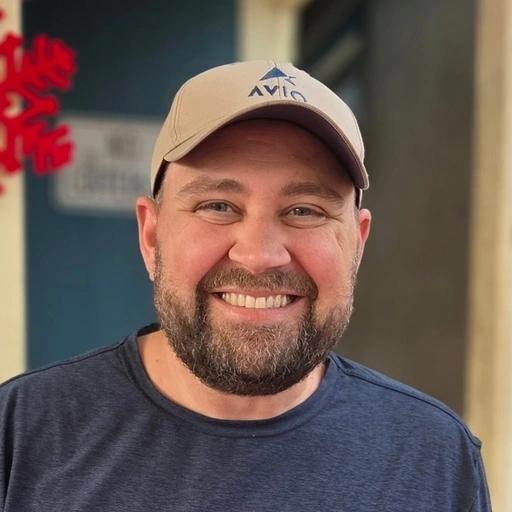

Michael Hemsworth
Michael is the Founder of New Song School of Music, growing from living-room lessons to multi-location impact.
Season 1
|
Episode 4
Scaling with Purpose: Michael Hemsworth on Building a Thriving Music School
In this episode of the Performing Arts School Entrepreneur podcast, host David Martin talks with Michael Hemsworth, founder of New Song School of Music, about his journey from teaching three students in his living room to building a multi-location school with hundreds of students, a performance hall, and even a “Music Bus.”
Michael Hemsworth
Michael is the Founder of New Song School of Music, growing from living-room lessons to multi-location impact.
Watch the Full Episode
Show Notes
This episode features a practical and insightful conversation with Michael Hemsworth, founder of New Song School of Music, about how he scaled a thriving multi-location music school from humble beginnings teaching in his living room to a bustling organization with hundreds of students, its own performance hall, and creative community initiatives like a “Music Bus.” Michael and host David Martin explore how passion and growth intersect with operational reality, especially when early systems start to buckle under increasing scale and complexity.
- Growing far on grit before systems caught up, operating hundreds of students with nothing more than Google Calendar, QuickBooks, and sheer determination
- The wake-up moment that revealed the limits of manual processes, and why scaling purposefully requires tools that match your vision
- How integrated systems transformed the school, freeing up time, reducing errors, and creating consistency across scheduling, communication, and billing
- Building a culture that scales, where values like consistency, kindness, and accountability are reinforced by both people and processes
- Lessons for owners still running on duct tape systems, including why the right tools don’t replace heart — they amplify it — and why simplifying before overwhelm is a game changer
Together, these themes offer an actionable lens on how passion and persistence fuel early growth, but how intentional systems and culture ultimately unlock sustainable scale. It’s a valuable listen for any performing arts school owner who feels like they’re doing everything right but still can’t catch up with their own success.
Host (David):
Michael Hemsworth. So good to have you on. I have followed your journey and I’m super impressed with some things that I’m going to highlight here just to get us started.
You started teaching piano at age 16. That’s unusually young—and I totally want to hear more about that. But you earned your bachelor’s in music from UC Davis before you were 19. That’s again super impressive. You obviously were super motivated with music.
You founded your music school, New Song School of Music, in 2003—so you’ve been in this industry a long time. You started out with 20 students teaching in a duplex and you’ve scaled that to multiple locations, commercial spaces, in the California area—which, by the way, is a very competitive marketplace. There are a lot of music schools in California.
You launched what you call the “music bus”—am I saying that right? Music bus?
Michael:
Yeah.
Host (David):
Mobile music lessons. You have a performance hall that you’ve built, 16 teaching spaces, and you’re super involved in your community, which I love, and I also want to hear lots about that.
You survived COVID—which not a lot of people can say that they did. Not only that, you thrived during COVID. You’re an author—you’ve authored books: Mr. Michael’s Music Maker Manual—love that—and you’ve authored A Parent’s Guide to Growing Creative Children. You’re a blogger. You’ve been on podcasts. You’re very active in this industry and you’ve done an incredible job launching, running, and scaling your music school.
So I’m so happy to have you on here and learn a little bit more about who you are, but also how in the world do you do all these different things?
Can you start off by telling me a little bit about how you even got started in music? How old were you? What was that like?
Getting Started in Music
Michael:
So I started taking piano lessons probably about 11 or 12. We got a piano in our house—I was probably about fourth grade. I actually was not the five-year-old prodigy that was in lessons right from the beginning. I was the only one of my siblings that formally studied music at all.
And the way I got started was kind of untraditional too. I didn’t grow up in a family that was particularly well off, and my dad—who was a small business owner, just a solopreneur—was at a business networking lunch and ran into a woman that had been friends with my aunt 40 or 50 years, in a whole other part of California.
She was a piano teacher, and he worked out essentially a barter-trade situation, and that’s how I ended up taking piano lessons. I stayed with her all the way up until college. She was my first job. I taught at her small school when I was 16 as well.
Host (David):
So she obviously was an inspiration to you—because you didn’t just take lessons, you actually took it and started teaching.
Michael:
I worked for her, yeah.
Host (David):
What was she like?
Michael:
It was somebody that recognized some of my innate talents, and I jelled well in terms of her teaching style. I talk about this a lot—understanding the different pathways. I’m a highly visual learner, so I fit well into the classical, traditional mold, and that was really her specialty too.
But I also appreciated that even back in the late ’90s she had an appreciation for creative use of technology. She was early on with some of the Clavinova features, the MIDI disks—when they were still on floppy drives—embracing old-school values and also using new tools.
Teaching at 16, College, and Starting New Song
Host (David):
So then you started teaching at 16. Were you using a lot of her tools and strategies at that point?
Michael:
Yeah. It was a very experimental phase. I actually taught in small group classes early on in her school. I grew up in private lessons with her, but that was a format she was expanding into. So I really got to see the pros and cons of private and group dynamics—big within our industry.
From a practical standpoint: What do I love about teaching in a small group? What’s a challenge? So I developed my philosophies around those pretty early, because I was deep in both formats.
Host (David):
At what point did you transition into college? Because you were young as well.
Michael:
I went through community college when I was young. I transferred to UC Davis. I still lived at home. I worked with her school all the way through my college career too.
I was 18 when I finished. Shortly thereafter I got engaged, got married at 20. We had our first baby—and that’s when I started my school too.
So New Song School of Music and my first child are the same age and have grown up together. Now that’s one of the locations.
I got to that crossroads as a newly married soon-to-be parent where I knew what I not only wanted to do, but what I was gifted to do—teaching music in this context, not in public education.
But it wasn’t a “real job,” you know? It was part-time, less than 20 hours. As you start to consider the grow-up phase, there was a lot to consider.
That became part of my philosophy too—even as a 20-year-old launching out. I always wanted not just a job for me, but a school context that could be stable for other teachers too. Can someone work full-time here? Can this be their only job? Can it be stable enough that people can stay 8, 9, 10 years?
That’s good for students and teachers. That’s always been important because that’s what I needed then—so that’s what I wanted to make.
Teacher First, Owner Second
Host (David):
So at some point you made the switch—from being the teacher to being the owner—because if you’re going to do this full-time, you’re going to have to be an owner.
Michael:
In a sense. I actually think I made the switch to owner because of the impact I wanted.
I tell people: if I’m doing my job right, I don’t actually want to be the CEO forever. I want to build the structures in place and then you’ll find me back with the five-year-olds and the egg shakers—teaching early childhood music—and back with piano kids coaching. I am a teacher.
So I’m temporarily less teacher and more business leader, but if I do it right, I’m steering myself back to the teaching career. Not everybody’s like that, but that’s who I know I am.
Host (David):
That’s cool. The fact that you know that says a lot. Do you still teach in your school right now?
Michael:
I do.
Host (David):
How many hours a week would you say you’re currently teaching?
Michael:
It varies. I insert myself a lot to start new things. In the past 12 months I’ve had a heavy focus on early childhood music—junior piano, general music skills, and our school outreach program on public school campuses.
There was a season last year I was on campus with kinder, first, and second graders every day—probably 20–25 hours a week. I probably teach at least three to four afternoons a week now, at least in some capacity.
From Duplex to Commercial Space
Host (David):
When you launched New Song, you were teaching from home?
Michael:
Yeah. I started with three kids. I remember my first summer wrangling three kids—two were siblings—for my first program.
Twenty was about the cap of what I ever taught as an in-home studio before we moved into our first commercial space.
I literally started from scratch. I worked as a substitute teacher by day and piano teacher by night.
Host (David):
How long were you in the house?
Michael:
2003 to 2007.
Host (David):
Did you know at the beginning you wanted to move into commercial space and grow?
Michael:
I did. I had elementary business plans and things like that, but remember—I was literally 21 at the time.
Also, I was in a cult at the time. That’s a whole other story.
A Cult-Like Church, Bankruptcy, and Rebuilding
Host (David):
Oh my gosh. What?
Michael:
I had about two years in a church that was very cult-like. I don’t think I’d classify it as a full-blown cult, but very cult-like. I don’t mind being dramatic.
I think it’s out there for sure. We watch a lot of cult documentaries because it’s a crazy experience. When you watch from the outside you can think, “Wow, that’s unbelievable,” and at the same time say, “Oh yeah—that’s a lot like what happened to me.”
Host (David):
When you’re in that situation, it’s so different. There’s fear. Your whole network—community, friends, sometimes family—is intertwined. It’s not simple to leave.
Michael:
Absolutely. In that environment there’s a reason for everything. I went through formative years in that environment, so it was the norm.
I’m grateful in a sense it happened when it did. By the time our first child was about four—when we left—we had our second child and left in the same 48-hour period. That was an intense week.
There’s a lot of damage that can happen in those situations. We still have a wonderful relationship with our parents, an excellent relationship with our children, and minimized the damage that could have happened.
Did I file for bankruptcy when I was 26 after coming out of a cult? Yes. But 26 is a reasonable age to go through chaos, come out the other side, and rebuild.
Some people say, “My 20s were wild because I partied.” Mine was, “I was in a cult, running a small business, and filed for bankruptcy after the pastor took all the money from my foreclosure house.” We all have wild 20s—they’re just different.
His Wife’s Role and Building Community
Host (David):
Let’s rewind a little bit. You were talking about your wife and her involvement in the school.
Michael:
My wife has been a full-time homeschool mom—she’s been in charge of our three kids and does a fantastic job. But I would consider her, in many ways, the community manager here.
It’s a flexible role—hospitality, ideas, awareness of what it takes to build community. Even if she’s not in the studio teaching lessons, she’s aware of the journey and brings a different perspective.
It’s valuable for me to have another person to talk through next steps. We try a lot of things—probably more than most. We say yes to a lot of things, but we also need to edit ideas and not try all of them.
We just redid our lobby. Three weeks ago we thought it could be more open—so we redid it. Two weeks later we’re pushing the front desk stuff into the back, doing lessons while they’re cutting holes in the walls, painting over the weekend, and I’m hanging decorations Monday morning.
Not reasonable—but we don’t always do things because they’re reasonable. She was definitely the design motivation behind it—to make the space more welcoming.
We’ve long said: we started this in our duplex, then our house. People came to our house for lessons from the inception. Even if there’s a thousand kids, we don’t want to lose that feeling.
So it’s not literally my house, but I want you to feel like you get to come to my house when you come to this school.
Host (David):
I love that. So she really helps shape the atmosphere—the experience.
Michael:
Absolutely. We did StrengthsFinder years ago. One of her strengths is “Includer,” and she has “Woo” too.
Includer is like—she’s never met a person she didn’t want to bring in and make part of the family. That mentality shows up at work and at home. That impacts us as a school. Inclusive isn’t just a buzzword; it’s a core value.
Personality Tools and Leadership
Host (David):
You mentioned StrengthsFinder. What led you to explore that?
Michael:
From the cult, actually—so thank you to that season. Good and bad happen at the same time.
I’m a huge nerd for anything in this vein: Myers-Briggs (not my favorite), Working Genius—we’ve done it with our leadership team. Big joke: “Do you see how many people don’t have tenacity on this team? Hug the tenacity people—they’re keeping the ship together.”
I’m high in invention and encouragement, which fits the teacher personality and being an idea person. I’m also a big Enneagram nerd. I’m a 3/4. Some days I think I’m a 4 with a 3 wing. My wife is a classic 7.
And I don’t expect my wife or leadership team to think like me. We can meet in the middle and create agreements, but I come in understanding you’re not going to think like me.
Host (David):
I’m a 7/8. That totally tracks with your wife being a 7—excited for the adventure.
Defining Success and Scaling Reality
Host (David):
You obviously had an idea of what success looked like. Has that changed?
Michael:
In many ways it hasn’t. Success for me is wrapped up directly in the lesson experience—looking through the window and seeing the human interaction and child-by-child growth. I walk the halls and measure that.
What’s changed is balancing idealism with reality. Years ago, if a teacher struggled, I felt like I could fix it—“We’re family for life. We’re all making it together.” And as we scale, not everyone is on the full journey. They might just be on a different journey—and that’s okay.
We should give people opportunities to grow. But not everyone will take the whole journey with you. Sometimes you can’t hang on forever. You have to identify problems, coach, and if it’s not changing, you have to make changes.
We want to run our business like a family, and in many ways we do—but it’s not literally a family. They can’t all be my kids.
Teacher Alignment and Hard Decisions
Host (David):
Can you think of a time when that reality hit you?
Michael:
As we grow and there are a lot of ideas, you see where people struggle to get on board. One example: lesson notes and parent communication.
Some teachers want to write a sticky note. That’s great—until you’re out sick and we don’t have it. Or they say, “I just have my vibe.” But if a parent asks me what their kid learned in six months, I can’t explain “the vibe.”
There are things teachers balk at, but if it works against community values—if they’re adamant, “I just do me”—at some point it breaks down. This isn’t just about you; it’s about us as a school, and most of all, students.
Most of these aren’t evil people. They’re good teachers. But it takes bravery to say, “We’re not on the same path. I need to let you go have your path, and I’ll have mine.”
Host (David):
How do you actually deal with it?
Michael:
Twofold.
First: cultivating what I call “radical candor.” There’s a book called Radical Candor, and it’s a chapter in one of my favorite books, The 15 Commitments of Conscious Leadership. I work hard to make it a school value: I’m going to come out and say it plainly. My wife has helped—because I’m the teacher. I’m always trying to lead people on a journey. She’s told me sometimes you have to be the boss and say, “This is the way it is.” I’ve had to learn that.
Second: team development. Size helps, but I’m interviewing even when we don’t actively need new teachers. I’m coaching people in new programs they don’t currently teach. I may coach three or four people for a program only one or two will teach next year—I don’t know who will be strongest.
We lead from fear when we think, “If I fire them, I’m stuck.” If you develop people, you’re not limited. Other people can surpass someone who isn’t teachable, and the whole team sees that.
COVID: Thriving Through Disruption
Host (David):
Were there key decisions that unlocked growth?
Michael:
Some growth was sticking in it long enough and making the most of opportunity.
We had a little over 400 students before things shut down in 2020. By late spring 2021 we had 500. There was a rebound we rode in 2021.
But we got to experience that spike because we were “in it.” When shutdowns started, we had everybody on Zoom within seven days. We kept all our staff—we didn’t let anyone go in 2020 apart from their own life changes.
When things started opening, we did Zoom lessons and also outdoor lessons—tents in the back parking lot, digital pianos out. Outdoor lessons in the morning, Zoom in the afternoon. We reopened and shut back down as restrictions changed. We called parents constantly: “This is what we’re doing next.”
You stay in it. You don’t give up. Then when the environment is conducive to growth, you’re there and ready.
Writing a Book to Support Retention and Empower Parents
Host (David):
You’ve written multiple books. What was the impetus for writing this one, and what impact has it had?
Michael:
This book I worked on end of 2024 and it was out by April 2025.
In 2024 I also got a virtual personal assistant. People ask how I got all this done—I had help. Formatting, uploading, project management. Shoutout to Bo.
Why did I write it? As we grew, retention changed. When it was just me and 20 kids, everyone stayed. In a bigger school you’re like, “80 people canceled lessons this month.” Some is normal, but I wanted to be proactive.
I have an internal goal: students who start with us stay at least 18 months. Not a magic number, but it’s long enough to push past hurdles and see real progress.
A big piece is parent empowerment. Many parents didn’t get strong music education themselves. They feel at a loss. They generally feel like piano lessons sound good, but then soccer, schedules, life gets in the way.
I wanted to frame what we’re doing as more than hobby-based. Learning an instrument isn’t just “can’t push buttons” to “can push buttons.” There’s brain development, confidence, focus, listening—the list is extensive.
Even if you’re in a preschool music class singing “Baby Beluga” and playing egg shakers, it looks recreational, but I believe we’re building a ton below the surface. Parents can’t always see it, so I wanted to communicate the value.
I also wanted to show parents there are different doorways. Some kids struggle with staff reading but are great memorizers. Instead of concluding “we’re not musical,” you can find another pathway and help your child succeed.
Host (David):
How do you use the book in your school?
Michael:
It’s early, but we give it to people. Studio tours—we ask if they want one. Vendor events—we give away books. I don’t intend to make money on it. It’s credibility and mission cohesion.
I have a distinct point of view. I want parents and teachers to know what we’re about. If we don’t mount a big rock show, here’s why. It’s important that people know we believe in something bigger than “give us money and we’ll teach you guitar.”
It also helps me communicate my values at scale—I can’t meet everyone the way I used to, but I want people to know my goals for their child.
And personally, it was a creative challenge. It forced me to make ideas concrete. It was like my first recital in a real sense—my first book.
Hiring Teachers and Building a Pipeline
Host (David):
Finding teachers is a big struggle. How do you find teachers and keep them long-term?
Michael:
At this point it’s part of my job. When we were smaller, it was a temporary job—when you need someone, you interview. Now it’s ongoing maintenance, like marketing. You can’t think about ads only in a crisis. Staffing is like that too.
We use platforms like Indeed. I don’t love paying, but it’s more costly not to have teachers applying. I don’t spend tons constantly, but I put money into the process.
We also get referrals from existing teachers. Timing doesn’t always match, so I track leads. I’ve reached back out to people I interviewed six months ago and said, “I have a new opportunity now.”
Systems and Management Software
Host (David):
Management software is a huge challenge. What was that process like for you?
Michael:
We were many years on Google Calendar and QuickBooks.
Host (David):
How far did you get?
Michael:
400 students.
Host (David):
You had 400 students on Google Calendar and QuickBooks?
Michael:
Yeah. Every teacher had a Google Calendar for appointments, invoices were in QuickBooks, contact information was in QuickBooks. We weren’t really texting then. Email was through Gmail.
There were holes—appointments and bills weren’t connected. Manual review was the only way to catch issues.
Opus was our first big pivot. We also used a CRM (a version of GoHighLevel / My Studio Success) for contact info, some email and texting, then Opus to replace Google Calendar and QuickBooks.
Migration was a big summer—reprogram appointments, cards, and contact info. I hired a high schooler as a data-entry person for the summer. It wasn’t fun, but it was worth it.
Over time Opus added features. I didn’t adopt them all right away because the other system worked okay. But dual systems can be problematic—you can lose things moving between them. Consolidating texting and emailing inside Opus became a game changer as we grew.
We also acquired two schools that were already on Opus, so we migrated them into the same account and kept one master database.
Marketing Philosophy
Host (David):
How do you approach marketing and getting new students?
Michael:
I want my approach to new students to be similar to meeting people. I want to walk around, meet people, learn about them, talk about what I do, form a human connection, then serve them with something I really believe in.
We use Google Ads—that’s served me well. Social media is newer to me. I don’t intrinsically love being on social media, but I do love relationship and sharing our personality.
I don’t love scarcity marketing. It’s not wrong, but it’s rare for me to say “only three spots left” because it’s not genuine—if you’re ready, I’ll move heaven and earth to find a spot.
We do community events—going to events and hosting events. I do school-based outreach. I’m trying to get back into library programming. I’ve done preschool music story times for years. I still run into people 15 years later who remember singing at the library. That’s longevity.
So: paid ads, organic social content, events, networking, being the face of the school, and strong referrals.
Staying Sane While Scaling
Host (David):
Any tips for someone overwhelmed while scaling—opening locations, more staff, more students?
Michael:
First: start with why. What we do is a little crazy, but it’s worth it. I believe it has lifelong impact on thousands of young minds.
I’m the opposite of an absentee owner. I substitute. I stay present. That helps me see issues early and be proactive.
And: don’t be afraid to go to Disneyland five or six times a year. Work hard, play hard. When you’re in it, be in it. Then go be on the roller coaster or on the beach.
Also: when you have 17 marketing channels, lean into what’s working. Don’t abandon ship too quickly. Give things time to gain traction.
Inspiration, Favorite Books, and Advice to His Younger Self
Host (David):
Who inspired you?
Michael:
Mr. Rogers. He respected the human being. He wanted to give without taking back. He believed children should be treated with dignity and not exploited. If I could do one thing in my life, it would be to look at people and say, “You are special right now.”
Host (David):
Favorite book?
Michael:
From a business perspective, the one I recommend most is The 15 Commitments of Conscious Leadership. Culture is important to me. If all this did was make money, I wouldn’t want to do it.
I also like Ron Clark—The Essential 55 and Move Your Bus. I like Donald Miller. I could keep going—there are so many good books.
Host (David):
What advice would you give your younger self—the newly married kid starting this business?
Michael:
I’d tell myself it’s going to be worth it. It’s a long game, a long journey, but it’s worth it. Stick in it, and it will go somewhere.
What’s Next
Host (David):
What’s next for you, your school, your family?
Michael:
We’re leaving for four weeks in the middle of the fall—world traveling. I have one child who graduated college this year, one who graduated high school, and one in eighth grade—so it’s a transitional time.
No plans to buy another school, but we can never say never.
We’re doing a lot of outreach with public education—bringing programs where there isn’t a public school music teacher. Accessibility matters to me.
I’m having fun writing and being creative. We just came out with a school mascot—our gnome. I’m working on starting a podcast for the gnome mascot. It’s silly, but it’s fun. I think we should be having fun.
Closing
Host (David):
Michael, I’m so inspired by everything you shared—your journey, your perspective. It’s so refreshing. You embody the joy of what music can bring into somebody’s life, and you’re sharing that with thousands of kids in your area.
I’m thrilled and excited to follow your journey—whether you buy more schools or not—just the continued passion you have. You’re truly making a difference in the world.
Thank you for being on the show today, and I’m sure we’ll catch each other soon.
Michael:
Yeah. Thanks, David.